
The Atacama desert is perhaps best known for its extremes: it is the driest desert on earth, only receiving an average of 1 mm (yes, millimeter!) of rain per year, and is so stark and lifeless in some places that its soils are closer to those on Mars than our own planet. But like so many places, it is so much more than statistics. People have survived in this environment for thousands of years, the earth has been grumbling and crumbling and creating itself through volcanic and tectonic action for millions more leaving behind landscapes for us puny humans to ponder. There was more to see than we could possibly fit in the few days we were here, but a few more highlights are below.
Yerbas Buenas Petroglyphs
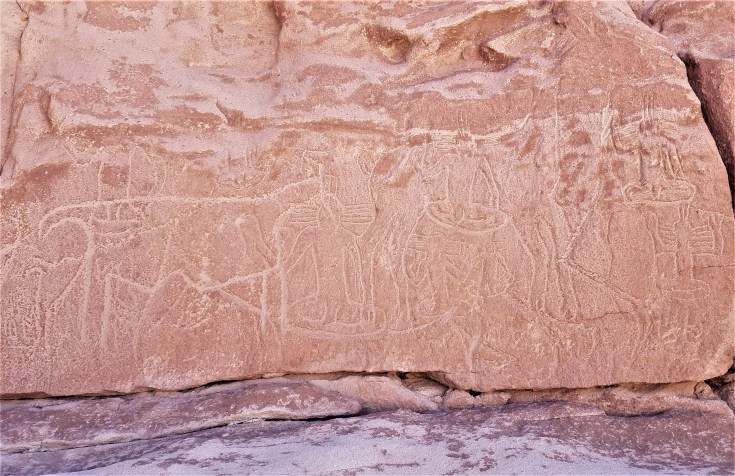


Thought to be from about 1500-1200 BC (or AC “antes cristo” in Spanish) and representing multiple artists, these petroglyphs covered dozens of panels on a series of rock outcroppings in the middle of the desert about 60 km north of San Pedro. By far the most popular image was the llama, which the indigenous people have depended on for food, transport, clothing and all manner of other items for thousands of years. We also found flamingos, anthropomorphic and shamanic figures, and other animals.
Valle del Arcoiris (Rainbow Valley)
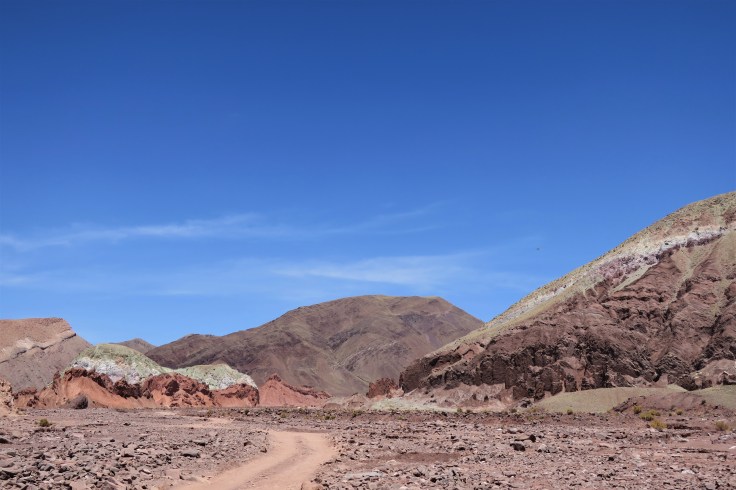
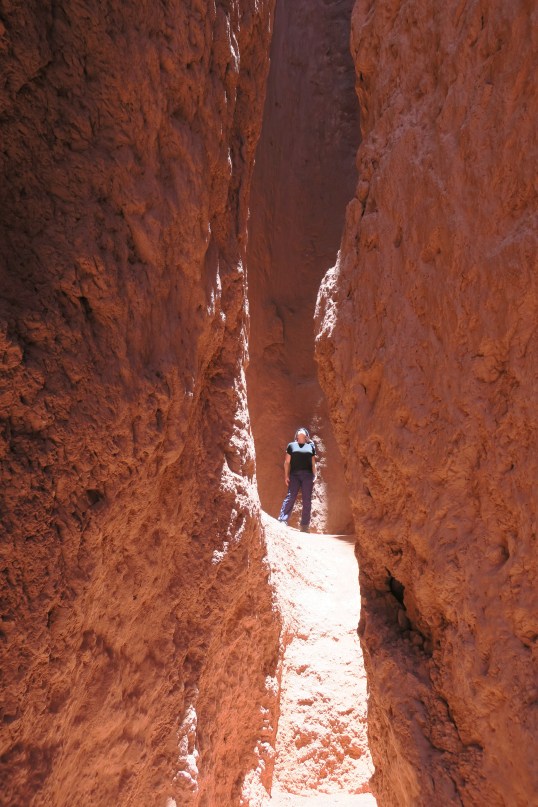
Deeper up the valley from the petroglyphs down a road for which we were grateful to have the 4×4 we visited the Rainbow Valley, so called because of the crazy mash up of minerals exposed in the local geology. Green oxidized manganese and copper, red oxidized iron and even lenses of white volcanic ash from previous eruptions were all visible around twisting turns and through sandy slot canyons.
El Tatio Geyser Field
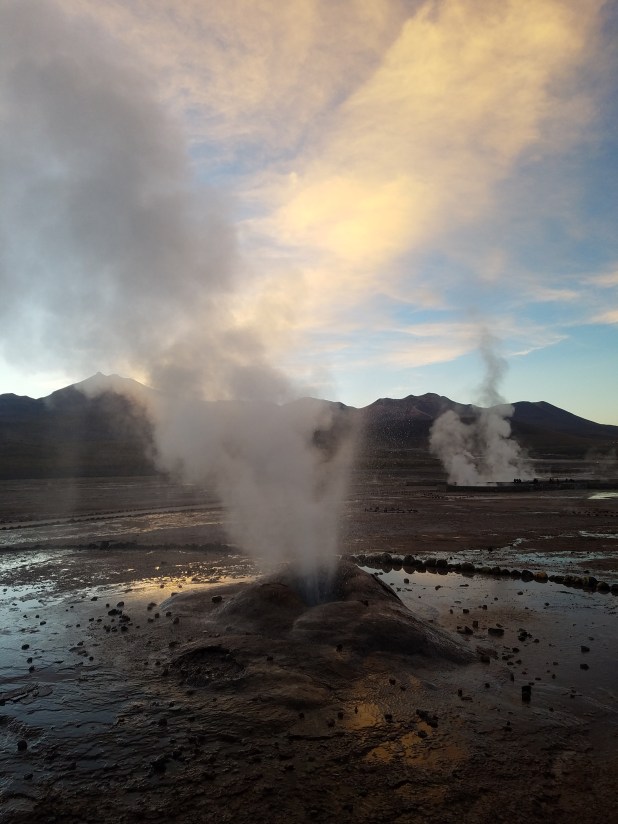
Perhaps the most fantastic place was the El Tatio Geysers. At 4,320 meters (14,200 feet) above sea level it is one of the highest and largest geyser fields in the world. The geysers are most active at dawn, and so we left the hostel at 4 a.m. to catch them at their peak. The 90 km drive on windy mountain dirt roads in the pitch black morning was an adventure in itself, but we safely made it with time to spare. After huddling in the truck out of the cold for half an hour (-2 Celsius, 28 Farenheit) the park rangers finally let us in and we were among the first to step foot onto the geyser fields as the sun’s light began to silhouette the surrounding peaks.
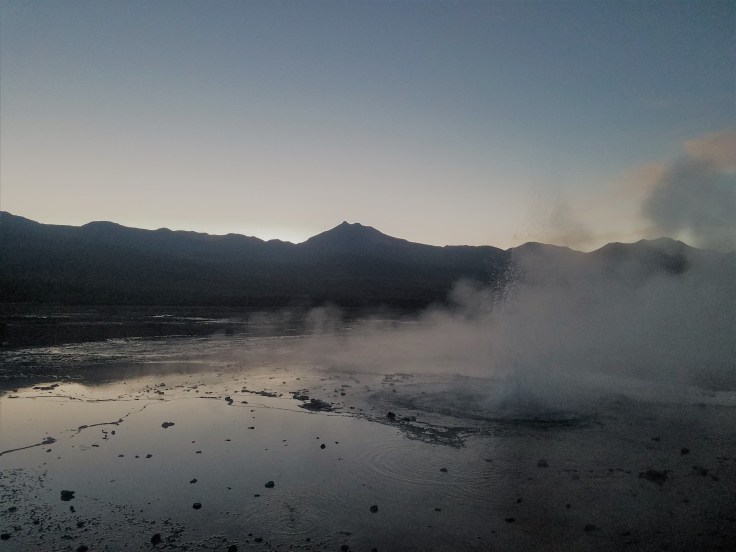
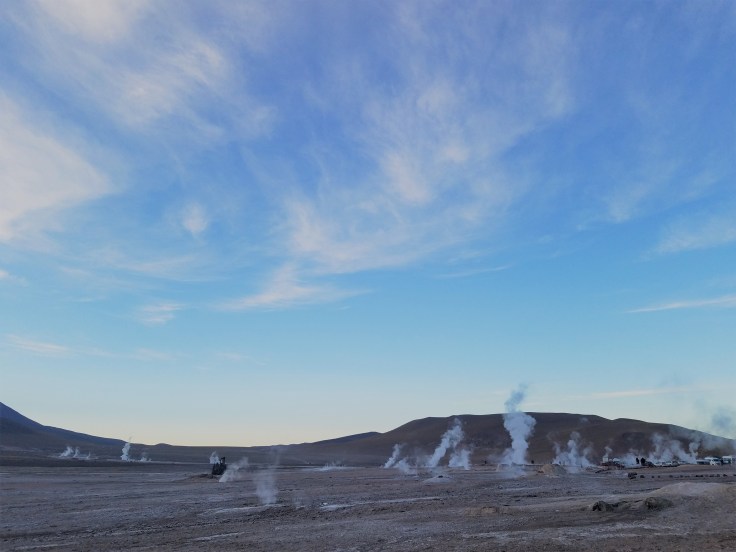
The geysers bubbled and gurgled and spewed steam and water into the air. The pathway through them was marked by painted rocks, but you could more or less walk right up to them! The sun rose bright and pink and all we can say it was magical, pictures do not do it justice. If you ever make it to this part of the world we can’t recommend this place enough – what a strange and wonderful planet we live on!


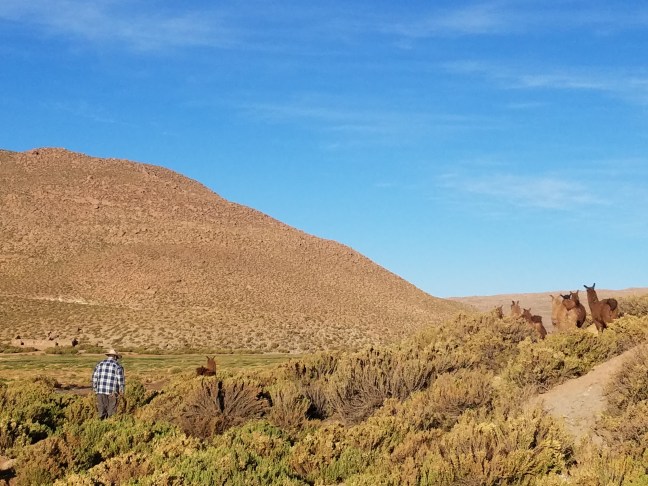
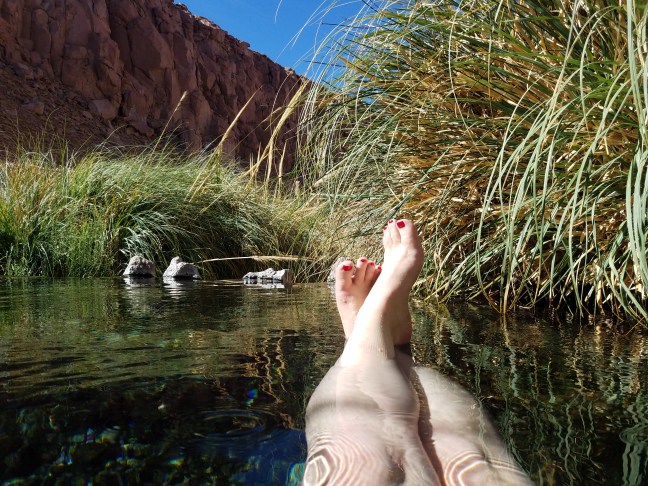
On the drive back with the sun up we were able to see where we had been, including a few Aymara villages complete with llama herds and high elevation wetlands with more flamingos and geese and other birds. We were able to cap off the morning at the geysers with a soak in the springs at Termas Puritama, a touristy and somewhat expensive but nicely developed series of warm (not hot) pools in a little oasis of riparian area at the bottom of a canyon.
Our time in San Pedro was over, and even though it is (as one local told us) Chile’s equivalent of Machu Picchu for all of the tourism it brings, it has that reputation for a reason…it is pretty awesome!

 Bones Without Borders
Merry Christmas, Steph & Sam! Kathy and I enjoy reading about your adventures, and we always look forward to the next installment. Great photos. Looks like you are having a wonderful time. Dave DV
LikeLike
We are in awe of your blog and your pictures, and we also look forward to the next installment. Have fun and stay safe! Chris and Bud
LikeLike