
After Torres del Paine we thought things couldn’t get much better, but our next stop in Patagonia took us to the literal end of the earth – El Fin del Mundo – also known as Tierra del Fuego.
Tierra del Fuego is the name given to the archipelago at the tip of South America. The region comprises the southernmost part of Patagonia and falls within both Chile and Argentina. Tierra del Fuego actually refers to the largest island in the archipelago where the first Europeans encountered the ever-burning fires lit by the indigenous people to keep themselves dry and warm (hence the name “land of fire”). The rest of the islands are collectively known as the Magallanes on the Chilean side and the South Atlantic Islands on the Argentinian side.
Aside from being so remote, the region captured our imagination as a place of deep history and adventure. Until construction of the Panama Canal, sailing around the tip of South America was the only way to get a vessel from Europe or the eastern United States to the west coast of the Americas. Ferdinand Magellan and his crew navigated through the islands on their historic circumnavigation of the globe. Sir Francis Drake was blown off course and ended up the first captain to (unwittingly) navigate the open sea between South America and Antarctica. Captain Fitzroy brought Charles Darwin here on the infamous voyage of the SS Beagle. Thousands of sailors perished while plying the treacherous waters on their way to the gold rushes in California and elsewhere. The exploration and colonization of the globe is intimately linked to this relatively unknown place – we were so excited to be able to experience it in person!
We were fortunate enough to spend a few days plying the waters ourselves (albeit safely and in extreme comfort!) with Australis Expedition Cruises (https://www.australis.com/site/en/). This outfit runs two small cruise ships between the cities of Punta Arenas on the Chilean side of the region, and Ushuaia on the Argentinian side. They also have exclusive access to areas that nobody else but government and scientists can visit. In four days we only saw a few small fishing or coast guard vessels, and definitely no cruise ships. We were the only humans for miles…it may be the most remote place we have ever been!


As with previous adventures there were too many wonderful sights to describe, so here are some highlights.
Austral (aka Southern, or South American) Forests
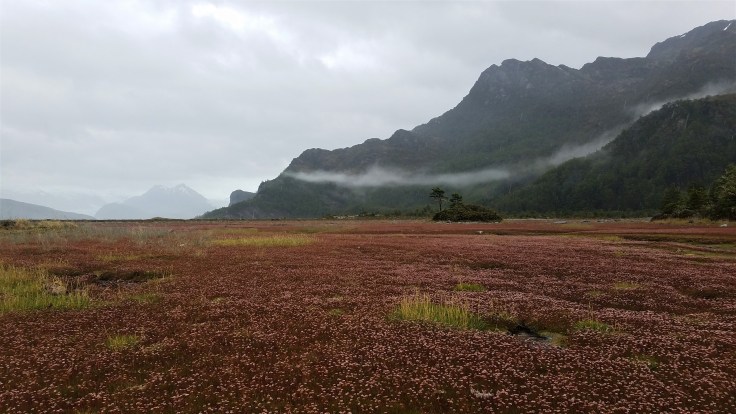
We disembarked from the cruise ship in Zodiacs to get to our expedition sites (they insisted on calling them expeditions, even though they were more like highly controlled excursions, but if they want to provide the illusion of adventure then why not?!) . Several of these excursions took us through more subpolar forest and wetlands, which of course were beautiful despite the near constant wind and rain. They gave us hot chocolate and whiskey to make up for any chills…we didn’t complain!


Glaciers
This land may have been formed by fire but it has been molded by glaciers, and several still exist as part of the Darwin Ice Field covering the coastal Darwin Mountain Range. We sailed through a section of the Beagle Channel called “Glacier Alley” where glaciers hang off the peaks and dip into the sea. They were named by Darwin and Fitzroy after various European countries. In a rather cheesy-yet-adorable gesture (and going along with the cruise tradition of stuffing guests full of food and drink), the crew served drink and snack pairings representative of each country as we passed the corresponding glacier.
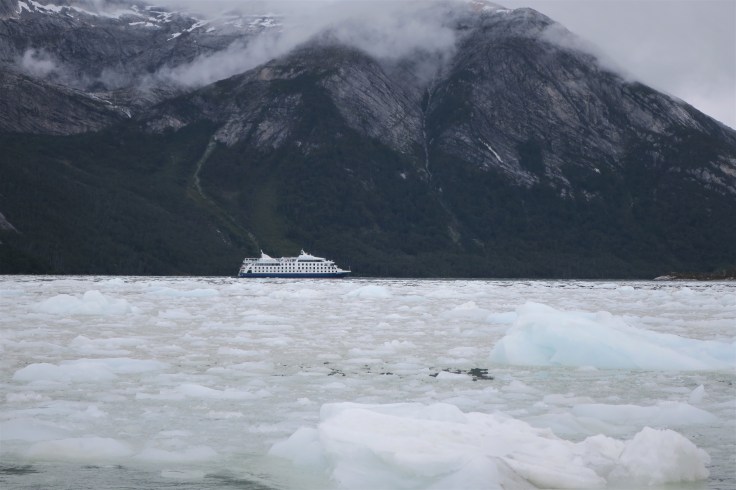
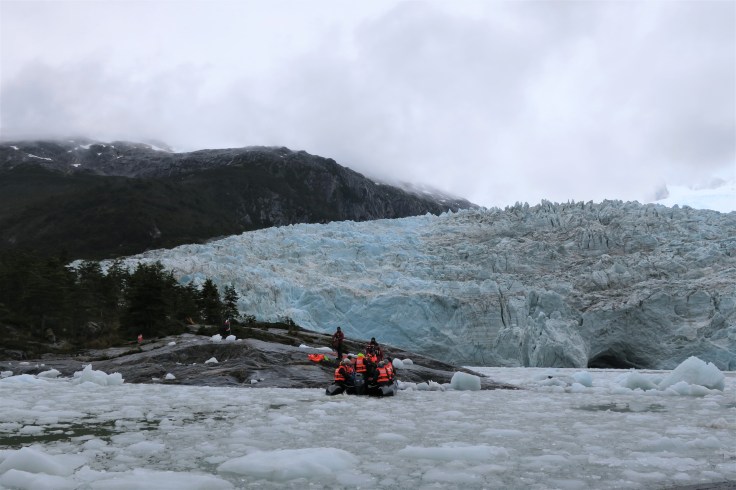

We also visited the Pia Glacier where we had to navigate through an ice field to get to it. Mini icebergs clanged on the metal hull of the cruise ship, and the Zodiacs had to crunch through a surface layer of building ice. It was intimidating and wild! We were able to hike very close to the glacier on the lateral moraine and observe the intense blues caused by reflected light and the striations caused by cycles of snow laid down over centuries. We even saw a big piece calve into the water with an exciting accompanying boom (although this sadly also represents global warming in action). It’s really profound to witness geology happening in in front of your eyes!
Penguins!
A definite highlight of the cruise was an excursion to the Tucker Islets where we got up close and personal with a colony of Magellanic Penguins. There are actually 7 species of penguins that live in South America, the Magellanic being the most common to Patagonia. These penguins do not live on ice (those are the Emperor and other species from Antarctica), rather, they hatch and raise their young in burrows away from the shoreline. The male is responsible for maintaining the burrow, and we watched several of them busily carry grass and sticks back and forth from entrances to the sea. We weren’t allowed to step foot on the island, but from the beached zodiacs we observed the birds caring for chicks in their burrows, cleaning and preening, sleeping and swimming, and doing that adorable penguin waddle up and down the hilly island. They are shy animals, but once they decided we weren’t a threat, several curious individuals came close to the boats. They are just too cute and have become Steph’s new wild animal crush!


Cape Horn
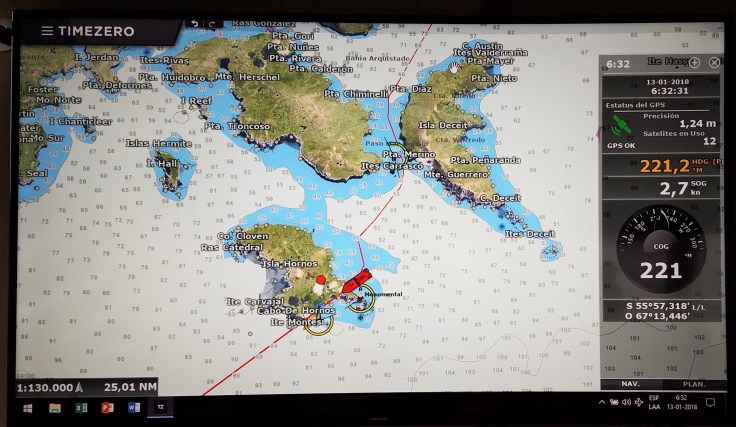
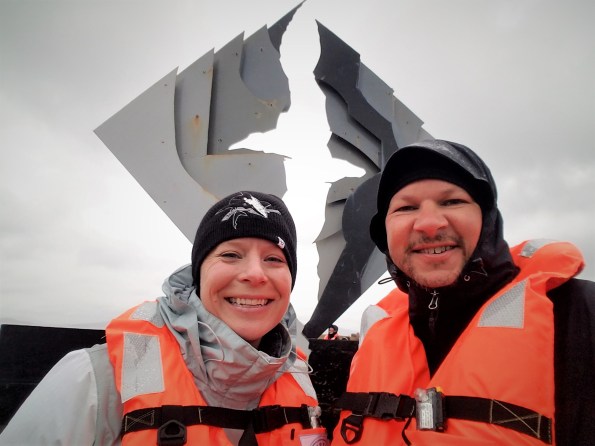
The culmination of the cruise was the chance to set foot on Cape Horn (Cabo de Hornos), the southernmost spit of habitable land on the planet (at nearly 56° south of the equator, it’s just 10 degrees from the Antarctic Circle!). Despite hundreds of years of navigation in the region, the island itself was only officially discovered and mapped in the 1700s by members of the Dutch East India Company, who named it after the captain’s birthplace. We woke up to a stormy morning and worried that we might not be able to land due to safety reasons, but the captain gave the green light and we all rushed to the Zodiacs to get there before conditions changed and we had to evacuate. On the island a single coast guard officer and his family operate the lighthouse, and a few monuments to perished sailors have been erected. Otherwise there is just wind and rain and waves and then nothing but sea until the ice of Antarctica. It was both exhilarating and profound to be in such a remote, tragic, beautiful place and we left feeling extremely grateful for the experience, for our safe arrival and return, and for living on this amazing planet!


New Friends
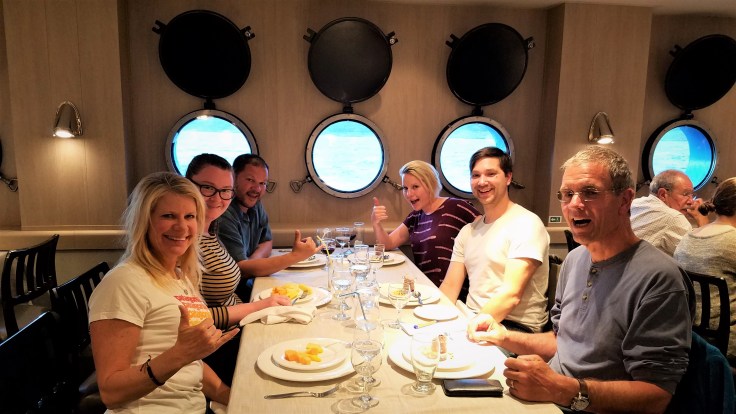
One quirk of the cruise is that they assigned each guest to a dinner table for the entire duration. For some reason they put all the Californians together and we met two fun couples: Jim and J from San Diego and Erin and Luke from…wait for it…Oakland! We were so surprised and delighted and we hit it off instantly. Who knew that it would take travelling to the end of the earth to make new friends? Life is funny that way.
And don’t forget the dominos…
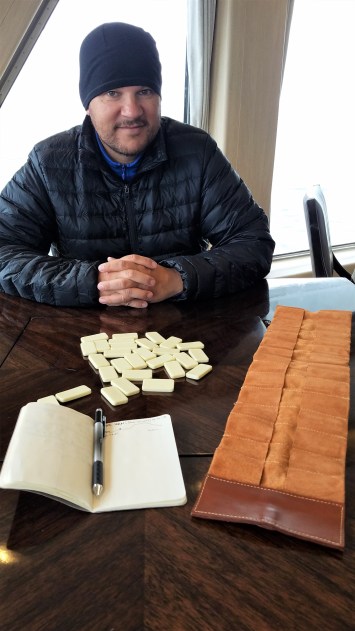
To top off this extra special trip, after over a month of searching all over Chile, we finally found our souvenir dominos on the ship. Good thing it was a Chilean vessel, so they still count as Chile bones!
As in the previous leg, all good things apparently must come to an end, and we disembarked in the port of Ushuaia in Argentina on a warm, overcast morning. We said our goodbyes to Chile (that beautiful country!) and hello to Argentina, a place we also know little about but are curious to discover!

 Bones Without Borders
For a gripping narrative of an ordinary seaman’s perilous voyage around Cape Horn in winter (July, 1836), I recommend Richard Henry Dana’s Two Years Before the Mast, chapters 31 & 32. If you didn’t have to read it in high school, it’s even better to read as an adult.
Dave
LikeLike