
Now that we’d seen some highlights of Chilean Patagonia, we took a week to explore the Argentinian side. We only saw a few attractions – the region is bigger than California! – but we certainly hit some good sites.
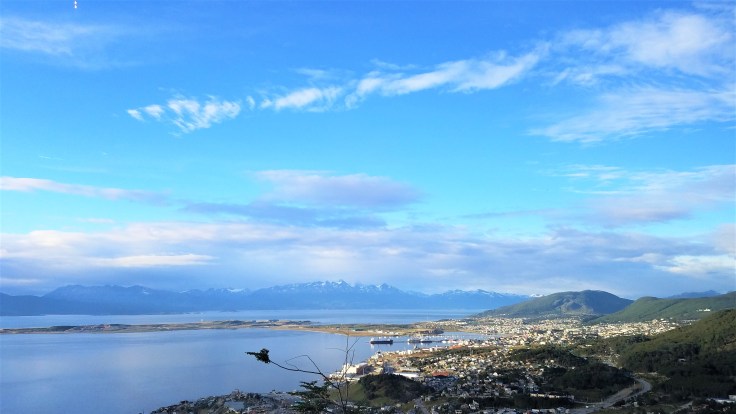
Our introduction to Argentina was the port city of Ushuaia, which has the distinction of being the southernmost city in the world. Colorful, compact buildings climb up the hill from the Beagle Channel into the forest like pictures of towns on Scandinavian fjords. Being at the end of the world, initially only those extreme enough or those forced to live there did; first of course were the native Selk’nam people, then came the missionaries, and later a penal colony. Today Ushuaia is the administrative and commercial center for the region and even has a university. It is also the primary embarkation point for voyages to Antarctica (both touristic and scientific) as it is the closest population center to the Antarctic Peninsula, which reaches out towards South America from the Antarctic land mass. Large cruise ships with thick hulls and tiny windows for warding off the rough Antarctic seas dominated the port and made our little vessel look like a toy! It seemed that most tourists in town were coming or going from Antarctica rather than trekking or doing more local tours like ours. Who knew risking extreme motion sickness and frost bite was so popular? We spent a couple of days getting our land legs back by visiting some local trails and museums and getting used to the new currency, culture and accent (and of course drinking and eating the world’s southernmost delicacies!).


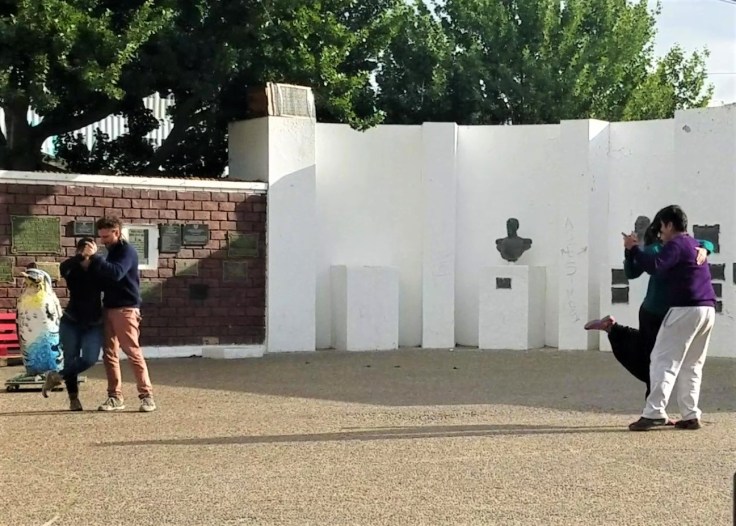
From Ushuaia we flew to El Calafate, the main hub for exploring Argentinian Patagonia. We had two main destinations in this region: El Chaltén and the Perito Moreno Glacier, both part of the Parque Nacional Los Glaciares, one of Argentina’s most famous national parks. After the beauty of Torres del Paine and the isolation of the cruise, the Argentinian experience felt a bit overdeveloped and touristy, although it still offered some special sights. We just had to admit we had been spoiled with our incredible introduction to the region!
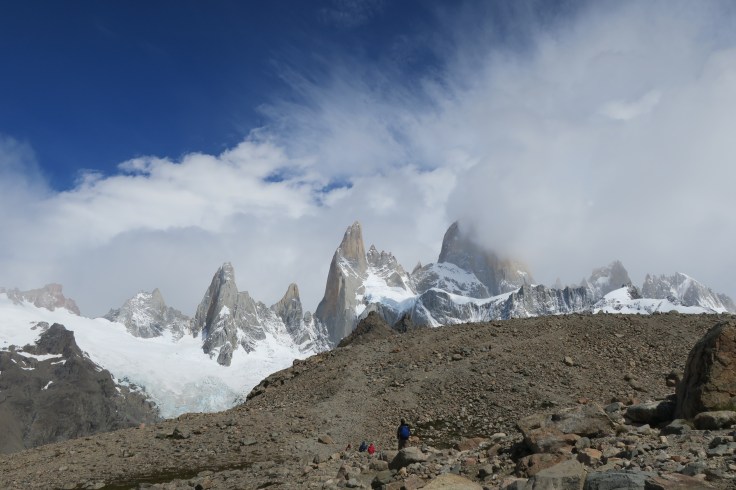
First we went to El Chaltén for some more trekking. El Chaltén is a funny little town about 3 hours north of El Calafate that exists solely to service tourists coming to trek and climb the local peaks. It was established only 33 years ago in order to create an Argentinian presence in this part of the border – apparently border disputes are a continual event between Chile and Argentina in the more remote areas. Hostels, outdoor gear shops and cervecerias (pubs) haphazardly line the two main roads which throng with young, rugged locals and brightly dressed tourists walking to and fro. It reminded Steph of the mountain tourist towns in Idaho where she grew up before the money and infrastructure and second-home buyers showed up. But town is just a means to an end; the main attractions here are the peaks, which draw mountain climbers eager to test their skills. The main peaks are Mt. Fitz Roy, named of course after the British captain, and Cerro Torre, a less imaginative name, but still a formidable challenge – before one can even get to the face one has to trek to the base, circle a lake, traverse a glacier, and not get blown away by the wind in the process.
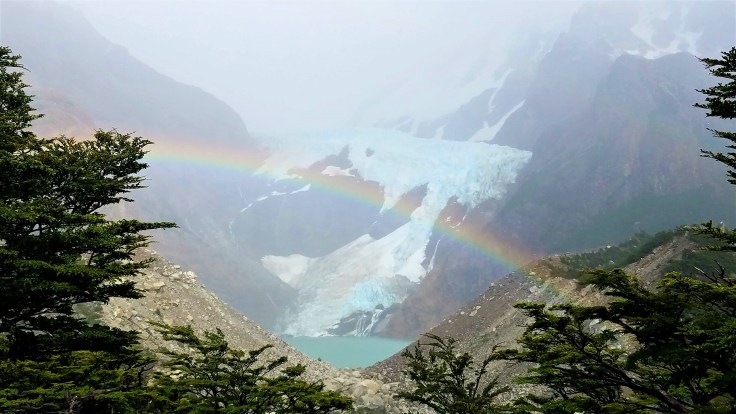
Not quite as hardcore, we satisfied ourselves with hikes to the glacial lakes at the base of each peak. We made the trek to Laguna de los Tres at the base of Mt. Fitzroy in the rain. We almost didn’t even try to summit, since the last kilometer of the climb is straight up a boulder field just like Torres del Paine, and we weren’t sure we would be able to see anything at the top. However, a few rainbows and patches of blue sky along the way encouraged us, so we went for it anyway and were rewarded with glowing peaks cleared by the gusty winds. There is just something exhilarating about hiking to views like these that keep us coming back for more, despite less than ideal conditions!

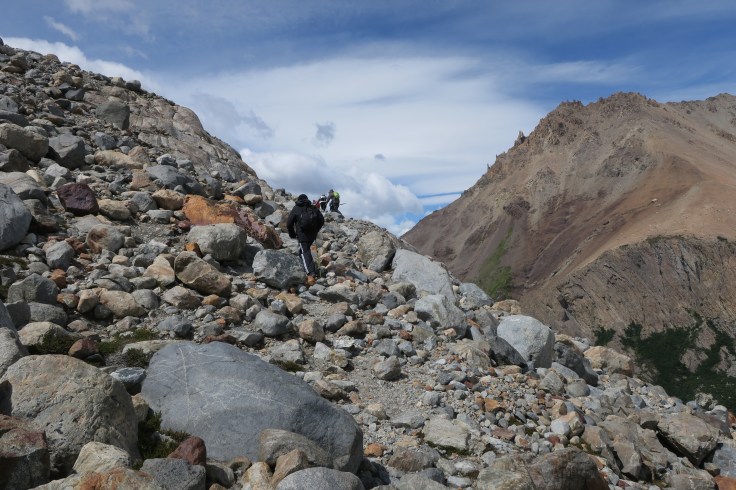

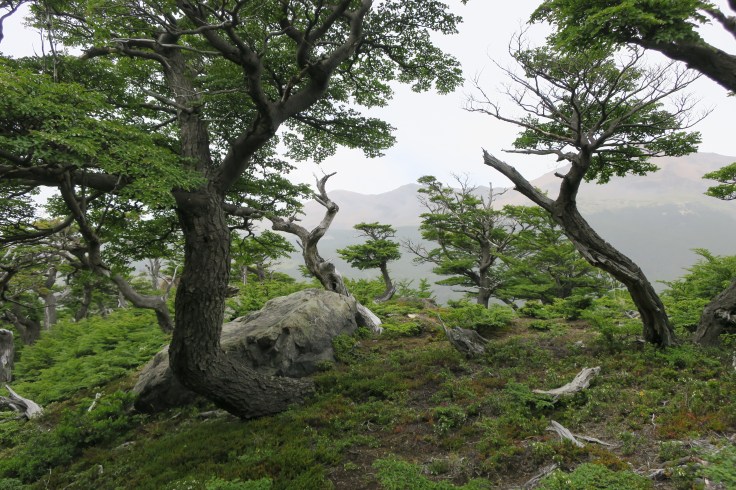
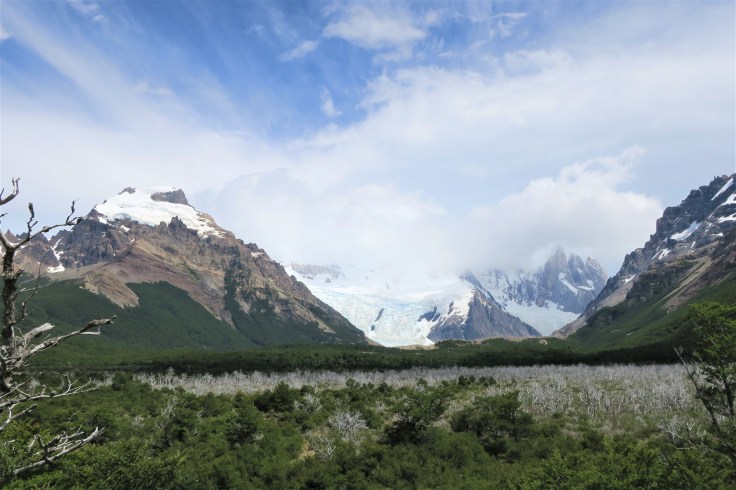
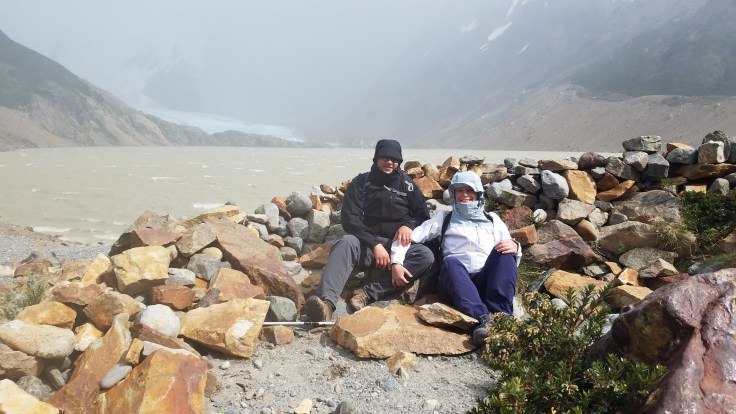
For the hike to Cerro Torre we had the opposite experience, with a pleasant start turning rough at the end. This time our destination was thwarted not by rain but by wind. On our way we passed through more lenga forest, the size of the trees and development of the undergrowth indicating the age of the glacial moraine on which they grew. For example, even after nearly 14,000 years the remains from the most recent glaciation still haven’t developed enough soil to support much more than lichen and a few scrappy shrubs and stunted lengas. It may not be geologically correct, but we surmised part of this must be due to the constant wind: by the time we got to the lake, gusts over 100 km (65 mph) from all directions threatened to blow us off the trail into the boulders! We hunkered down behind a wind break long enough for a laugh and a photo and quickly retreated back to the safety of the forest. At least we can say we finally got to experience the legendary Patagonian breeze!
We headed back to El Calafate after a few days for our final destination: Perito Moreno Glacier, one of the large glaciers comprising the Southern Patagonia Ice Field. The ice field covers over 12,300 square kilometers (approximately 4,700 square miles) and is the second largest non-polar ice sheet in the world. Perito Moreno Glacier itself is over 5 kilometers wide and 75 meters high and has the distinction of being one of the few glaciers in the world that is stable or advancing, rather than retreating. We took a day cruise on Lago Argentino, Argentina’s largest lake that drains Perito Moreno and several other glaciers. The cruise took us to several waterfalls accessed by short hikes before taking us to the main attraction, where we walked along an impressive series of boardwalks that take visitors to various viewing points overlooking the glacier. We even drank a whiskey on glacier ice at the park lodge!
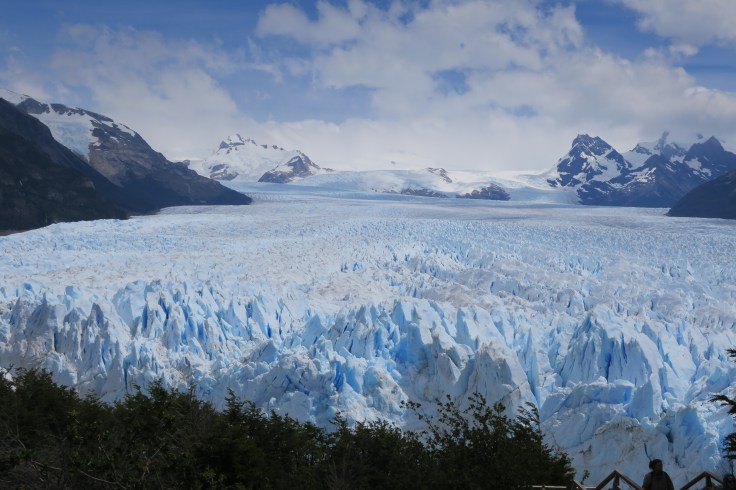
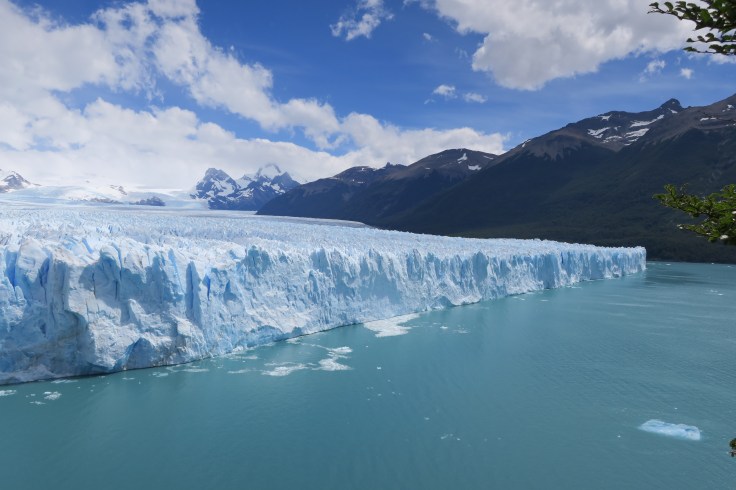


At the very end of the day we got to cruise right in front of the glacier and see the incredible and imposing formation up close. We also had the great luck to see a major calving event – even the ferry captain was impressed! We debated afterward if it was a result of global warming, or if being an advancing glacier it was actually just the glacier doing its glacial thing. Perhaps a little bit of both? Sam seems to have good luck with pulling the camera out at opportune moments and caught the calving on film. Click HERE to see the video!
And with that our Patagonian adventure came to an end. Every moment was amazing and we would wholeheartedly recommend anyone save and spend their precious vacation time and dollars on visiting this incredible part of the world. We definitely want to return someday!

 Bones Without Borders
Leave a comment