
After Buenos Aires we headed north across the Rio de la Plata to Uruguay. Sandwiched between Brazil and Argentina, this little country (about the size of Washington State) has an interesting mix of both cultures plus its own relaxed vibe. It is one of the most liberal countries in South America; the majority of the population doesn’t claim a religion and the government provides legal weed for those who register (no selling to tourists, though!). Its economy is primarily based on agriculture and once outside the cities the landscape grows quickly rural. Most visitors come here for a quick visit to the capital city of Montevideo or to hit the beaches along the Atlantic Coast. We did both plus a little extra!
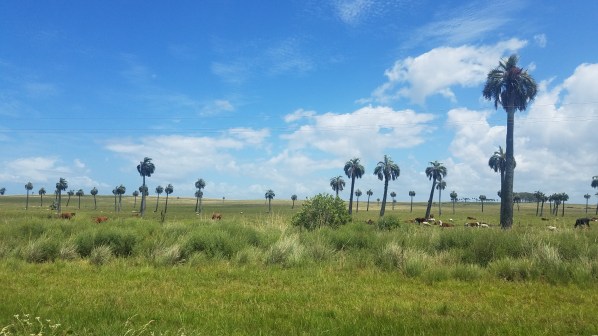
We rented a car and spent a week tooling down the east coast of the country, stopping in beach towns that catered to surfers (Punta del Diablo), families (La Pedrera), and the well-heeled (Punta del Este). La Pedrera was probably our favorite because it had more amenities than Punta del Diablo but was still quiet and relaxed in comparison to the ritzier Punta del Este (often compared to Miami for the rich and beautiful set that visit and reside there). We also discovered cheap and plentiful caipirinhas on these beaches (a cocktail made of crushed ice, cane sugar, limes and a sugarcane-based spirit called cachaça) that is now Sam’s favorite drink!


In addition to the beaches, we found a few parks and historical sites. Near the border of Brazil we visited the Fortaleza Santa Teresa, which marks the original border between the Portuguese and Spanish colonies until Uruguay declared its independence in the early 1800s. We also stumbled on an aviary and kind of mini zoo in the Santa Teresa Park where we saw our first capybaras (called carpinchos in this part of the world) which are a large, oddly cute water rodent and cartoon like-toucans. We would have preferred to see them in the wild, but this was almost as good.


We also observed that Uruguayans are even more obsessed than Argentinians about their mate (pronounced mah-tay). Mate is a tea-like infusion made by steeping the dried leaves of the yerba mate plant (a species of the holly family) in near-boiling water. It is traditionally drunk from a hollow gourd with a silver metal straw called a bombilla. Nearly every other person we passed (and this is not hyperbole!) carried a thermos in the crook of one arm and a mate in their hand (Sam calls it the “mate grip”). They even have hot water dispensers at gas stations and other public places so no one has to be without a full thermos for long! We finally decided to see what all the fuss was about and purchased our own mate set. It took a few tries to get used to the slightly bitter flavor and the messy preparation ritual, but we found that once we got the technique down, we rather enjoyed it!


Aside from the beaches a big draw for us to this country at this particular time was the Carnival (spelled Carnaval in Spanish) holiday. Uruguay, and Montevideo specifically, has the longest Carnival celebration in the world; they don’t just limit themselves to Fat Tuesday, but celebrate with performances and parades from January to March. The main events are the llamadas (literally “calls” but in reality it’s a parade) and the tablados (stage performances).
During the llamadas dance and drum troupes from all over the city parade down the street showing off their moves, competing for the prestige of being named the best performers for the year. Each group must have certain traditional elements and we noticed a pattern: first come the flag bearers, then dancers, then actors representing an old man and old woman, then some baton twirlers, and finally some scantily clad female dancers just before the drum corps. To see a video of one of these troupes click HERE. The llamadas took place just two blocks from our hotel and went until deep into the morning – we did our best to keep up with the party!


The tablados are composed of several murgas, which are satirical performances by local theater groups. They can range from silly to political and are typically very musical and colorful. The term tablado comes from the decorative stages put up on street corners and parks throughout the city where the performances take place. In the old days tablados would block entire streets and neighborhoods would compete for the best stage. Today the tradition continues in more formal settings, such as the one we attended at the Museo de Carnaval in Montevideo’s old town. We couldn’t understand a thing the performers said (they talked so fast and used so much slang!) but they must have been hilarious because the crowd around us was cracking up. Something about little kid’s birthdays and grandmas and the Pope…definitely some jokes in there!

We also can’t leave Montevideo without mentioning Casa Roberto. We stayed in an early 20th century colonial house lovingly restored and converted to a small bed and breakfast by an Italian expat named, well, Roberto. It was like walking into a design magazine! The place had soaring ceilings and saturated colors and elegant wallpaper and tastefully chosen antiques and art books dotting every surface. We wanted to move in and make it our home immediately.


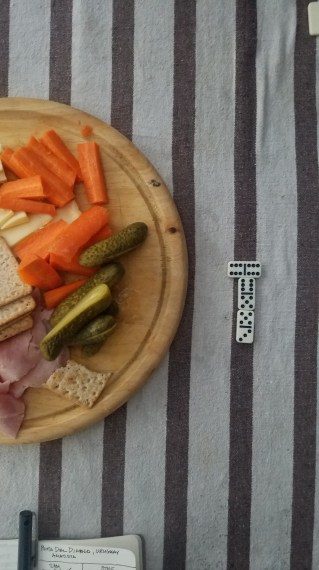
Finally, on our way back to Argentina we stopped in the town of Colonia del Sacramento, the oldest town in Uruguay, originally established by the Portuguese in 1680. Its historic quarter has been declared a UNESCO World Heritage Site and has a mix of ruins and restored buildings among cobblestone streets. We spent a quiet Valentine’s Day tooling around town in a golf cart and playing dominos. (For the curious, Sam won the games on the beaches, but Steph had the cities!)


Oh yeah, we also found a set of teeny tiny bones – so cute, but hard to hold for a game!
Uruguay may be small in comparison to its neighbors but we really liked the vibe and change of pace from Argentina. We would also put it on our list of places to return!

 Bones Without Borders
Leave a comment