
VALPARAÍSO,
what an absurdity
you are,
how crazy:
a crazy port.
What a head
of disheveled
hills,
that you never finish
combing.
Never
did you have
time to dress yourself,
and always
you were surprised
by life.
-from “Ode to Valparaiso” by Pablo Neruda
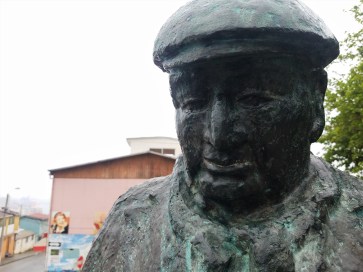
We left the bustle of Santiago for the coastal city of Valparaiso on a Saturday along with hundreds of other Santiaguenos on their weekend getaways. The city is an hour and a half bus ride from Santiago for less than $7 ($5 on weekdays) and winds through the coastal mountains before dropping you right into the historic port city.


Valparaiso, or Valpo as it is called here, is like a messier, hillier, more colorful San Francisco with a good dose of Oakland port town grit. Crumbling mansions and modern apartments and shanties tumble over the steep hills above the port, painted in all colors of the rainbow and clad in anything from corrugated tin to the fanciest stucco and stone. The city is broken up into the flatlands (El Plan y El Puerto) and the hills (El Cerro), and each Cerro (hill) has its own neighborhood and character. Our apartment was on Cerro Carcel, near the old prison that has been turned into an open air cultural center (great reuse of institutional space!).


Ancient elevators called funiculars take you to the top of the cerros for $100 cp (about $0.15) if you don’t want to walk. The entire old part of the city and the funiculars in particular have been declared a UNESCO World Heritage Site. It certainly feels warranted as you wander the narrow streets and staircases and marvel at the palatial government buildings, most of which are now abandoned except for banks and the Navy and Customs offices (it is still Chile’s major port city, after all).


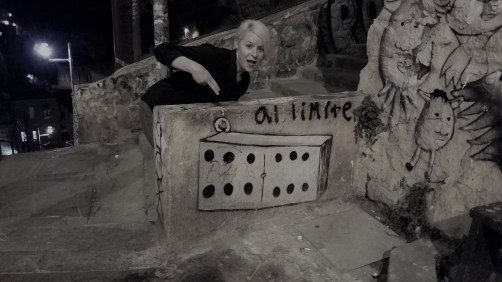
Another unique element, and maybe our favorite part, is that the city has become an open air museum of street art. Nearly every surface, private or public, has been covered with artistic murals or graffiti tags, and not just in one neighborhood or area, but literally throughout the entire city. The paradox is that since the city became a World Heritage Site, the murals are illegal, even with permission of the property owner, but artists and vandals keep painting anyway.
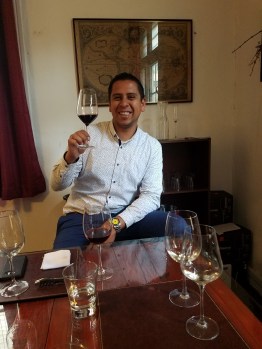
We didn’t plan well enough to take a wine tour to any of the valleys that produce Chile’s grapes around Santiago or Valparaiso (note to future self: most businesses are closed on Mondays, so make that’s a travel day rather than a tour day!). We did, however, find Al, a young Chilean sommelier/graffiti artist/tour guide who grew up in New York and runs an amazing Chilean wine tasting out of a well-appointed room in a large, ancient hostel. He was super professional, let us try many more than the three or four tastings included in the booking price, and gave us some great insider tips on Valpo. We wish we had met him sooner!
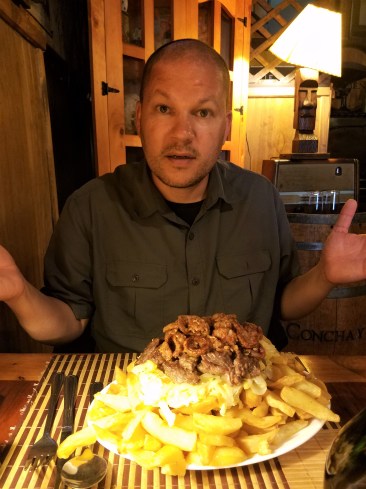
One of the places Al pointed us to was a classic Chilean restaurant with massive portions. I’m sure the waiters laughed in the kitchen after we ordered, but hey, all of the locals had piles of food and drinks on their tables, too (although they also had many more than two people!).


There is more to see than we could possibly share here, but we hope you enjoy this peek at a rough and lovely city.
Next stop, northern Chile and the driest desert on earth!
P.S. Guess who won the Valpo tournament?

 Bones Without Borders
I love reading all about your adventure!!! Your writing is spectacular! Have you considered being a travel writer!? 😉 And the photos are also incredible. What a beautiful way to document this journey! Miss you guys and can’t wait to read more!
LikeLike
Beautiful photos! Love all the graffiti! You two look super happy and in your element!! Miss you much!
LikeLike