
The last 10 days have been so packed with activity it will take several posts to capture it all! Here is the first installment.
It all started with a flight into Calama, the major commercial and financial hub for Chile’s Atacama Desert region. Chile is the world’s largest copper producer, and just north of the city is the largest copper mine in the country. But we weren’t here for the mining!
In Calama we rented a 4×4 pickup truck (complete with roll bars, these people take their off roading seriously!). We named it “El Diablito” and headed 100 km east across the desert to San Pedro de Atacama. The town itself is not much to speak of – a small community of dirt roads and squat, natural brown or white washed, single story adobe or cinder block buildings – but sitting at the foot of the Andean precordillera and ringed with volcanos, it has become the primary tourist hub for visiting some of the most spectacular places in the desert.


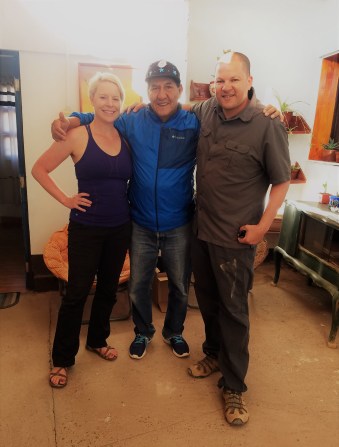
We stayed at the Hostal Siete Colores, a small hostel with some private rooms a little outside of the town center. Accommodations were basic but clean and quiet. Most importantly, it was run by a gregarious and charming Bolivian named Gustavo (who Sam dubbed “El Jefe”) and his wife Celina who were very patient and kind with our bad Spanish, learned everyone’s name, and took good care of their guests. From this humble little hub we had a few of the most fantastic days of exploring ever!
First stop: Valle de la Luna (Valley of the Moon).
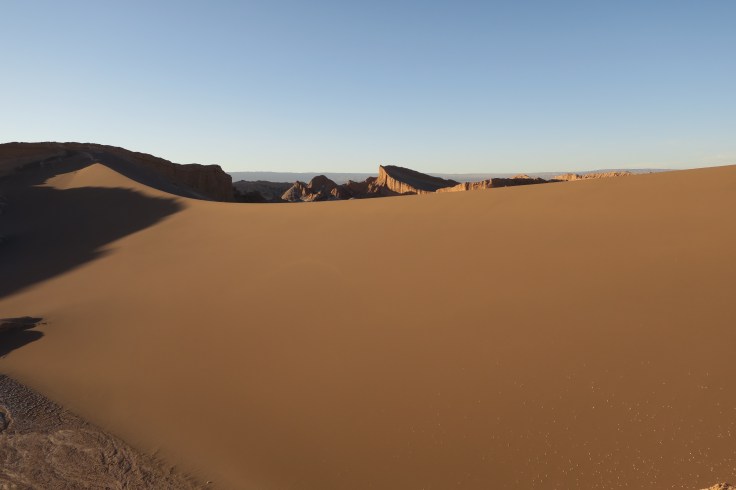

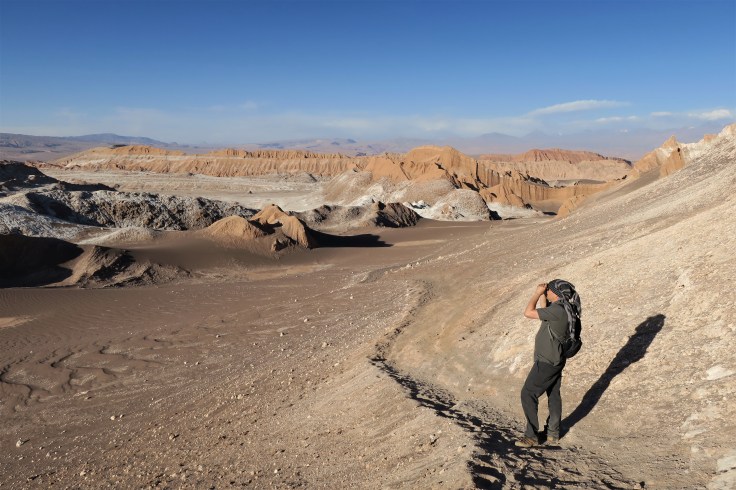
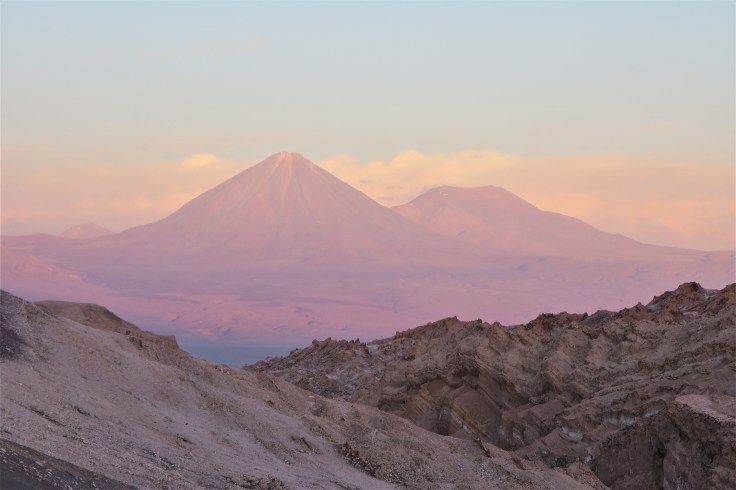
Valle de la Luna is a crescent shaped valley of sand and stone and dunes less than a dozen kilometers from San Pedro within the larger salt flat surrounding the area (the Sala de Atacama). Veins of salt run through the sandstone like quartz runs through granite, and salt glitters on the dusty surfaces like a dusting of snow and broken glass. There are several abandoned salt mines in the park, with some of the buildings even made out of salt blocks! Of course like all picturesque desert landscapes there are strange, windswept rock formations and smooth, rippled dunes. All of the tour books said the best time of day to visit the park is at sunset, so we followed a small crowd to a viewing point on a windy ridge and watched as the rock formations changed colors with the setting sun. What was once monotone tan and gray shifted to gold and purple and brown. Most breathtaking was the Volcan Licancabur glowing pink and purple in the distance, perfectly shaped, like the prototype for all other depictions of volcanoes.


Next stop: Laguna de Chaxa, Reserva Nacional “Los Flamencos”
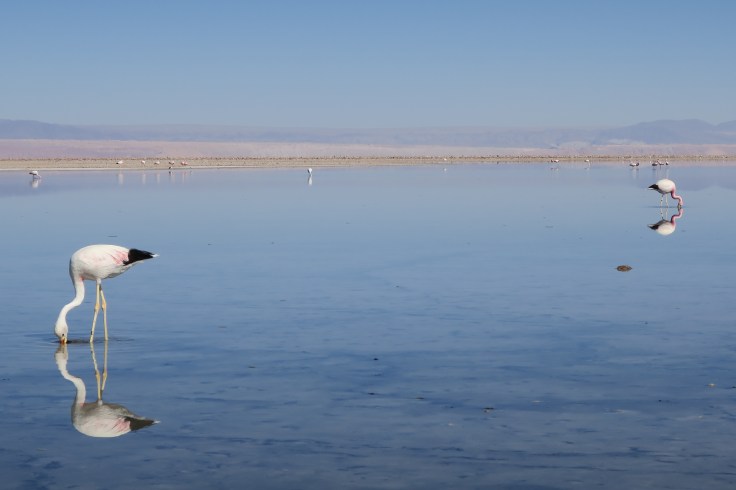
Flamingos! We had always thought them to be tropical birds, but apparently they live wherever they can find shallow, salty, brackish water that supplies their food (mostly sea monkey-like brine shrimp and other microorganisms). Did you know the beta carotene in the shrimps is what gives the flamingos their pink color? We learned all of this and more at the Laguna de Chaxa within the National Flamingo preserve approximately 65 km south of San Pedro. Three types of flamingos inhabit the Chilean desert and highlands: the James, the Andean and the Chilean flamingo, all of which are pretty rare, and all of which were happily using their enormous curved beaks to dig for food right in front of us! Especially charming was the James flamingo, who dances in a circle like a ballerina while eating.


The salar (salt flat) is also ringed by one of the most active volcano ranges in the world – the Lascar – and from this preserve we could see the Volcan Lascar itself literally smoking in the distance (sorry, the photos didn’t turn out well enough to show)! We were assured it blows ash approximately every 7-10 years and is considered one of the most dangerous volcanoes on earth. Lovely 
Next Stop: Lagunas Miscanti and Miñiques
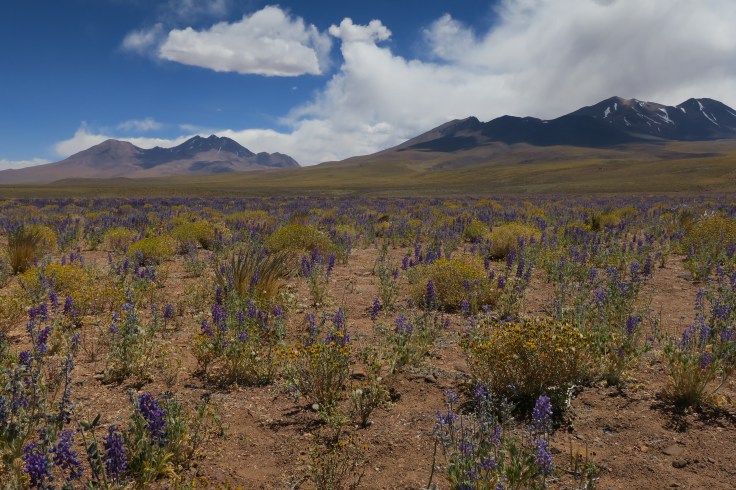
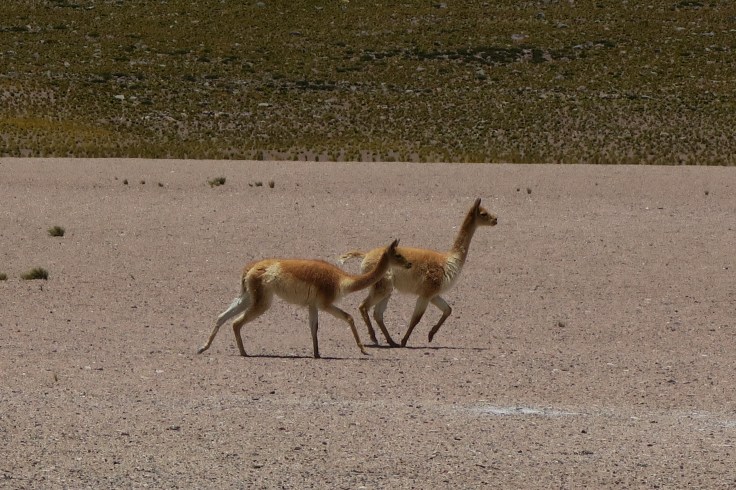
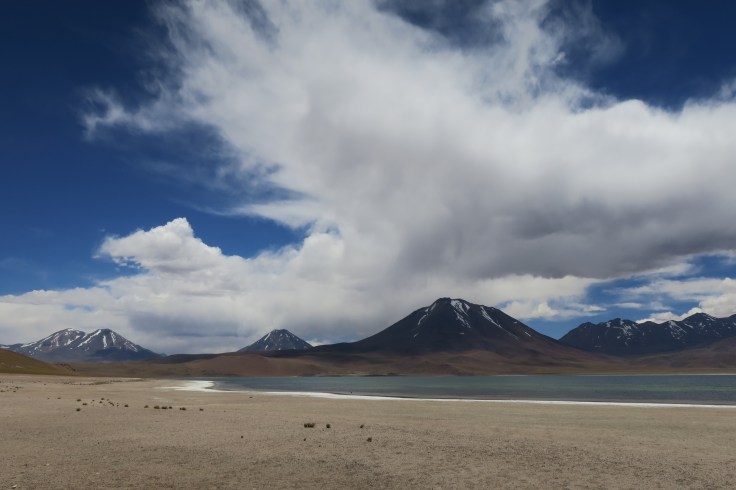
These lakes are only 110 km south of San Pedro, but at an elevation of 4,120 meters (13,517 feet) above sea level! The climb out of the desert salt flat into the precordillera (aka foothills, if you can call great sloping masses of volcanic residue 11,500 feet above sea level “hills”) and finally into the altiplano (highlands) was breathtaking. Vegetation changes marked the rising elevation, going from salt scrub to squat blooming bushes to fields of lupine to the bunchy, dry grass that is the hallmark of the windswept altiplano landscape. Along the way we saw our first of many vicuña, small tan and white camelids that appear a bit like a cross between a llama and a deer, also emblematic of the region. The lakes themselves were formed after an eruption of the adjacent Miñiques volcano blocked the drainage from the mountains and created the basins which provide an important breeding ground for flamingoes, as well as the endangered Tagua Cornuda (Wari) or Horned Coot, an ungainly black bird with a horny shield on its forehead (again, no good photo with our dinky camera, but here is a link to the Birds of Chile page if you want to see one).
One really cool thing to note is that all of these preserves are managed by the local indigenous people in cooperation with the Chilean government. The whole region has a strong indigenous presence, very different from the more Europeanized cities to the south, and it was especially interesting to see a successful model of stewardship within the local communities working in a way that we only talk about in our country. We may be global leaders in some things, but are far behind in others!
At this point we were wowed out, as you may also be by now, but we are far from finished with the desert! Stay tuned for Chapter Two of the San Pedro de Atacama adventure!

 Bones Without Borders
Finally, I had a moment of quiet to start reading your blog. What an adventure and simply stunning landscape.
Are you planning to publish this? I think you should. It’s wonderfully written. A lovely combo of information and exaltation!
LikeLike
Thanks for the kind words! It’s been a fun way to share our journey, we shall see where it goes!
LikeLike
Ditto~this is a work of art & you should publish it!
I think there’s a Newsletter in your future~ Merry Christmas & keep having FUN.
xoxo
Michelle
LikeLike
Wow, amazing pics! So exciting!
LikeLike
Hey you two, Feliz Ano Nuevo from the O! Enjoying your words and stunning visuals! Sounds like an amazing adventure so far, enjoy and look forward to hearing more. Take care, Mike.
LikeLike