
In Arica we hooked up with the Fundación Altiplano (http://www.fundacionaltiplano.cl/en/) and the Ruta de Las Misiones (http://www.rutadelasmisiones.cl/en) who’s mission is to help rural, mostly indigenous communities rebuild their towns and economies through promoting traditional building techniques and agricultural practices as well as eco- and heritage-tourism. We had a two part experience, the first being a tour through the parks and villages of the precordillera and altiplano and then working with the foundation at their latest project site.
Our guide for the first two days picked us up from our beach front hotel, gave Diablito a once over, and we were off! His name was Ernest (not Ernesto) and he was fantastic. He took over the helm of the truck and in the first day took us from sea level to 4517 meters (just shy of 15,000 feet!) in elevation to the Lake Chungará and the Parque Nacional Lauca at the Bolivian border. He jokingly called it the vomit-tour because most visitors end up with severe altitude sickness, but we were prepared with our altitude sickness medication and had no problems except for an odd tingling sensation in our fingers that Ernest assured us was “totally normal.”
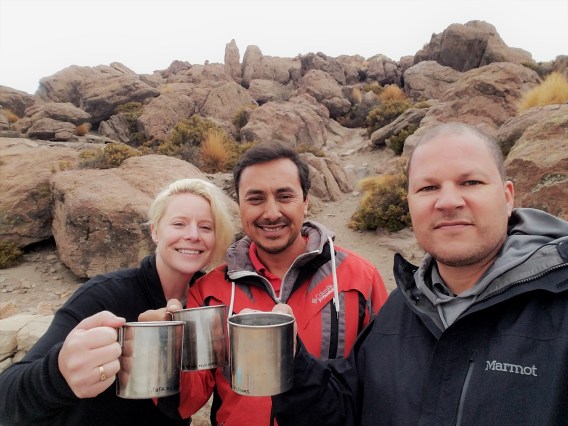
We are so happy we felt fine because it was a spectacular climb! We passed through the Reserva Nacional Candelabra, which is a special zone from about 2200-2900 meters above sea level where the candelabra cactus grows. We stopped at a truck stop and had coca tea (our first of many cups) to help acclimate, and roamed around a pukara, ruins of an old fortress at the top of a strategic pass in the hills.


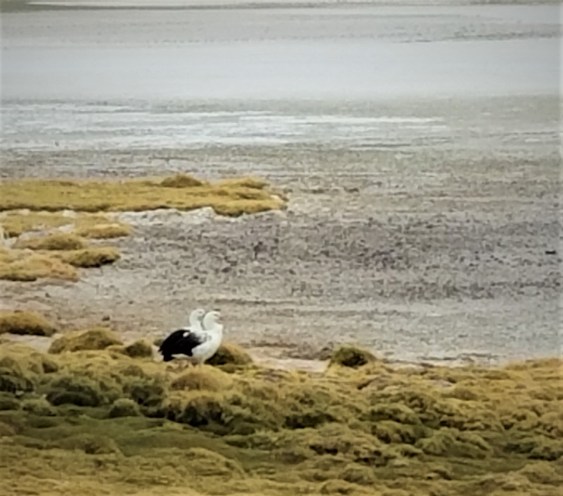
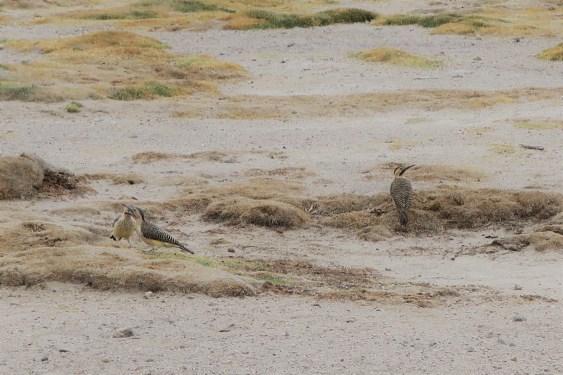
Things got most interesting, however, once we reached elevations over 3500 meters, climbing out of the precordillera into the altiplano where we began what Ernest called our “Andean Safari.” In the high wetlands we saw the guallata, or Andean Goose, which always come in pairs and mate for life; if one dies, the other one stops eating until it starves to death! We saw more black coots, this time without the horn on their face, and the Andean flicker which is a kind of woodpecker.
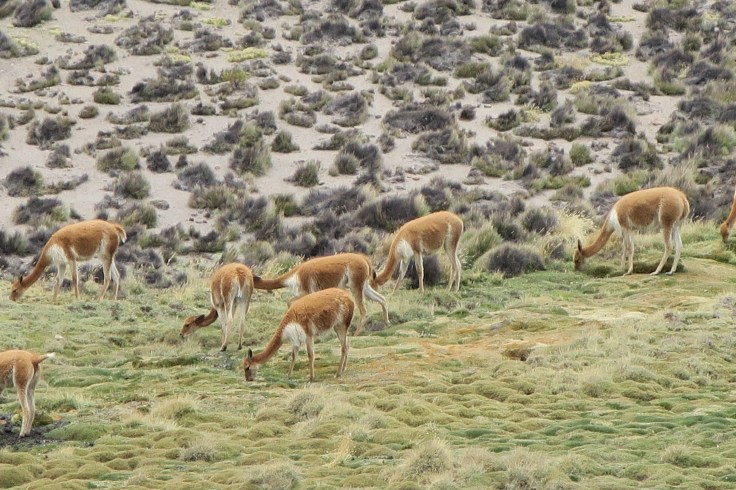
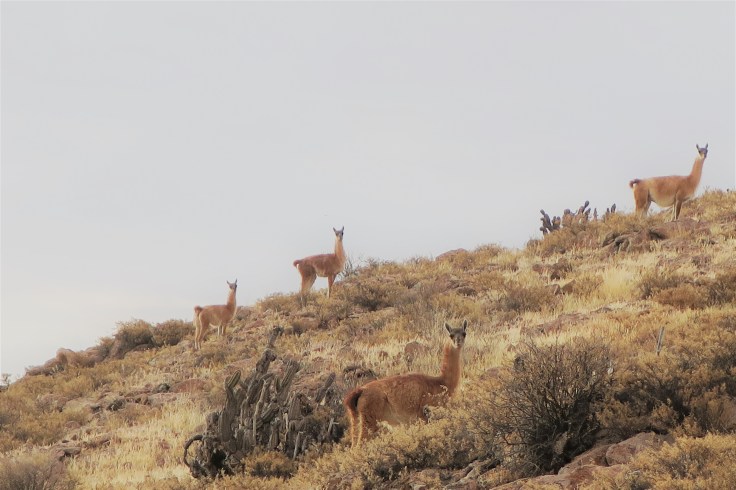
We also met our first alpaca; her name is Coke (pronounced Ko-kay) and apparently she loves sweets and will literally run you down for one! There are four camelid species native to the Andes: alpacas and llamas which are domesticated, and their wild counterparts the vicuñas and guanacos. We were able to see all four! We also saw our first vizcacha, a rabbit-like critter with droopy whiskers and a curly tail that promptly became Sam’s favorite animal. Apparently there are no rules against feeding the wildlife because to our great pleasure we were encouraged to do so.



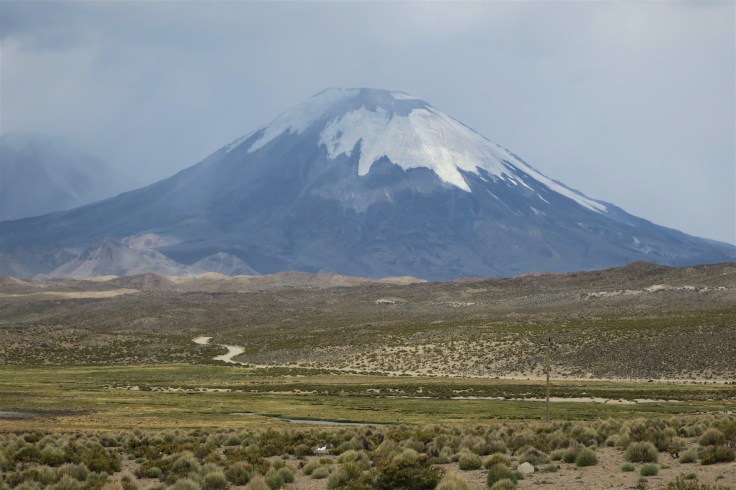
At the lake we pondered the llareta, a neon green lichen that up close looks like a micro succulent and grows over rocks hard as armor, and drank in the views of more volcanoes at the top of the world as trucks carrying goods to and from Bolivia rumbled by. Again, photos barely do these amazing landscapes justice!





Our lodging for the night was back down a crazy switchback dirt road to a village called Belén, where we were put up in a guest room run by a local family and fed chicken stew for dinner and rolls and Nescafe for breakfast (that tends to be the going menu around here).
The second leg of the tour took us to the Reserva Nacional Las Vicuñas, where guess what, they have a lot of vicuñas; and to the Salar de Surire, a large salt flat named for the ostrich-like suri (or ñandu, or rhea) that is found in the Andean highlands, which we were also lucky enough to see but unable to capture well without a good zoom lens (click here for a link to see the common Andean birds). More flamingos too!
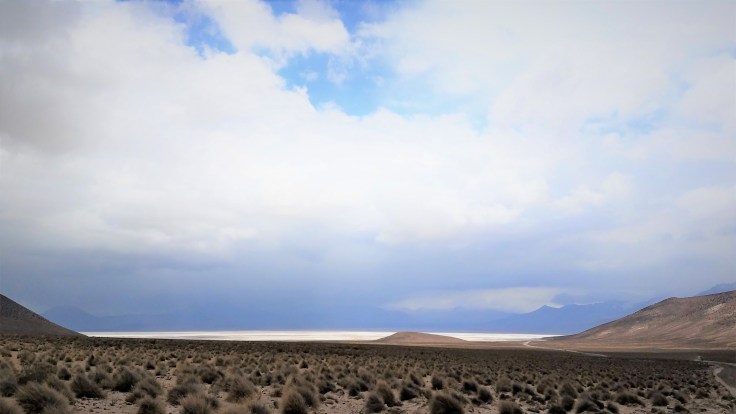
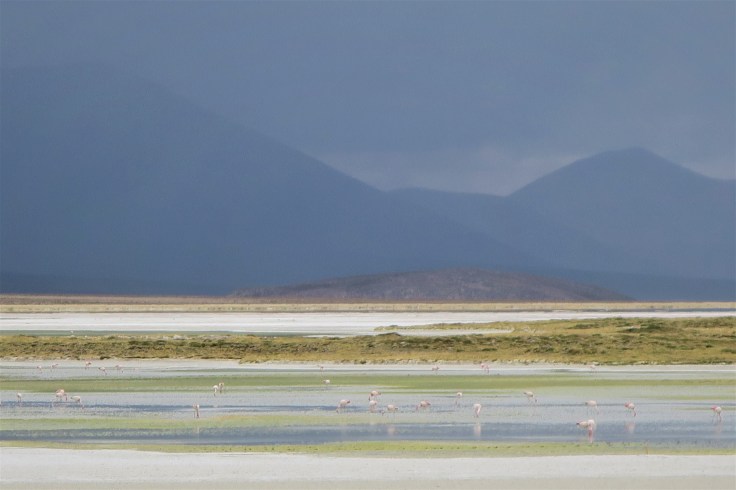
The weather remained dramatic the whole day and by the time we got to the Salar de Surire we were driving through thunderstorms with the lightning striking the volcano summits right in front of us! It was breathtaking! In the middle of all this, we circled the far side of the lakebed to find the Termas de Polloquire (hot springs!) that steamed green and sulphurous against the dark sky. The boys did not get in – but you know Stephanie did!


After a picnic lunch with some park rangers and vizcachas overlooking the salar, we headed out of the park to the town of Codpa in a narrow, fertile valley in the midst of the desert 120 km outside Arica. Unfortunately, the roads on this section of the trek were in poor shape and the rains had washed out the road in places, so we had to drive in first or second gear most of the way (approx. 100 km) which took hours. Poor Ernest was pretty blazed by the end. Fortunately, the wildlife and landscapes continued to amaze us (how many times can someone say “wow” in 48 hours?) and so we rolled into our guest house exhausted and exhilarated.
Next we were off to a couple days of manual labor, which oddly sounded like a welcome respite from so many long days on the road. In all (including the day trips from San Pedro) we put nearly 3,000 km (~1800 miles) on our trusty little truck!
For a map of our drive check out the KMZs in Google Earth:
https://drive.google.com/drive/folders/1-lz4LvC6VF7lea44cdpB88Djc52ECQA1?usp=sharing

 Bones Without Borders
Great writing, Steph! Very pleasurable read.
LikeLiked by 1 person
I was reading from the bottom up- and saw the fat bunny animal and immediately loved it too! I want to feed one! That road up to the large, snow-capped volcano looked pretty intense- glad you had your pills and special tea. Looks like a great part of the trip so far.
LikeLike
Wow…so jealous of that hot springs experience! Reminds me of lounging in natural hot springs pools on a trip through Yellowstone and Snake River rafting. But the high plains stark scenery is certainly much more impressive, and must have felt so good after hiking and gathering dust at that treeless elevation! Stephanie, your smile in the steamy water says it all…!
LikeLike