
The route described in the previous post is part of a relatively new heritage trail called the “Ruta de los Misiones” being promoted by the Fundación Altiplano in collaboration with local governments and communities. The foundation has spent the last 25 years restoring adobe churches in the small indigenous villages that dot the altiplano as a way to encourage communities to preserve their cultural heritage and promote local management of tourism in the region. Many of these villages have been nearly abandoned as families move to the cities looking for work and educational opportunities and the once lively landscapes are crumbling to dust. However, many families return to the villages to celebrate special events such as feast days, births, deaths and weddings at the churches. In this way, the churches remain a part of the living heritage of the region, which is why the foundation has focused on their preservation.
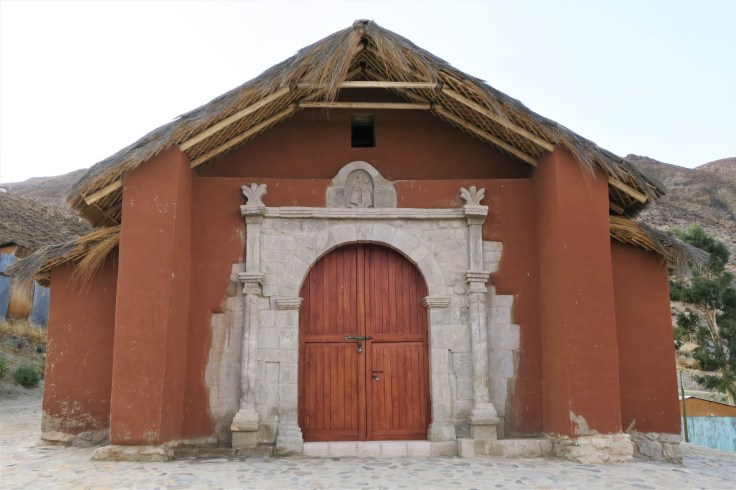
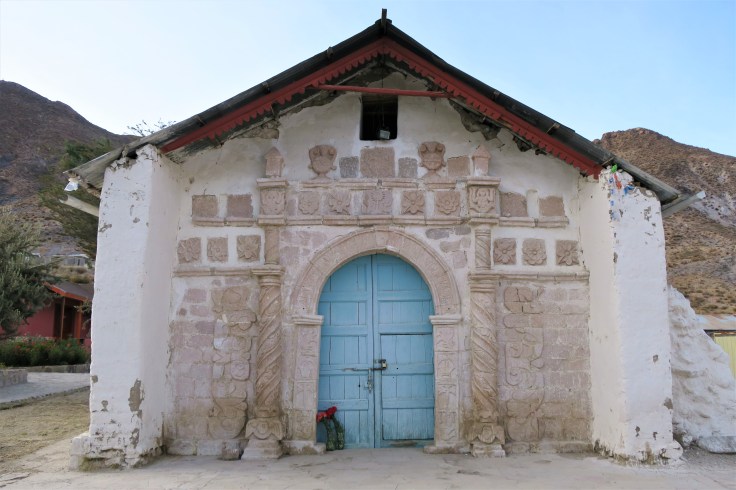
The churches themselves date from as early as the late 16th century and were built along the routes bringing silver from the legendary mines of Potosí in Bolivia to the coastal ports, although of course most were built on top of existing indigenous settlements (ah, colonialism). They are all made of adobe with thatched straw or mud roofs. Some are decorated with stone carvings or frescoes, others have been left plain. They all have a bell tower, usually separate from the main building, as well as an enclosed plaza and free-standing cross outside the main entrance. Unfortunately, on our visit most of the churches were locked and only the visiting parish priest or a local community member has the key, so we couldn’t see inside. We were told the interiors have similar variations as the exteriors, ranging from simple and austere to richly decorated with frescoes and other carvings in a vernacular (i.e. not artistically or architecturally trained) manner.
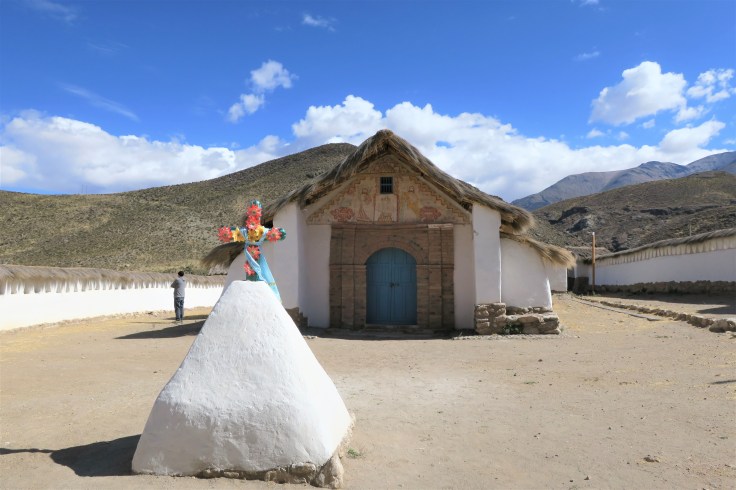
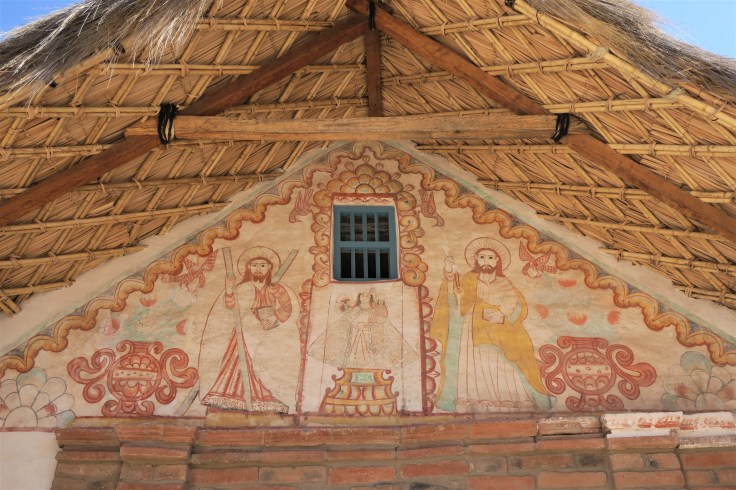
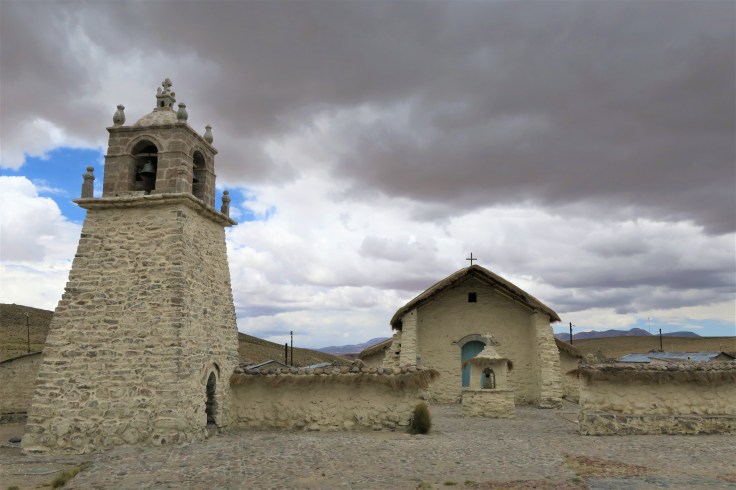

While the restoration work on the churches is outstanding – the foundation has used all traditional building techniques and local materials where possible with a few modifications such as adding buttresses to make the buildings more structurally sound in earthquake-prone Chile (remember all the volcanoes?) – having a pretty building, even if it is the most important one in the village, doesn’t necessarily revive an entire community. A community needs people, and the people need to make a living.
In order to further promote investment in these villages and entice families to return (or even newcomers to invest) the foundation has expanded their mission to begin restoring the homes and businesses in the villages, as well as encourage investment in traditional agricultural production. On our drive we still saw elderly ladies tending their herds of llama or alpaca or sheep, and elderly men hoeing terraced fields of oregano or alfalfa or potatoes. From our vantage point it looked like a lonely and sporadic enterprise, but it also excited us because just think of all the North American and European (and hopefully South American) hippy-foodie-yuppie types who would go bonkers for this kind of stuff (talk about local, sustainable, organic, traditional food and fiber production!)!
Which brings us to our work in the town of Guañacagua in the Codpa Valley. The project was to restore dozens of building facades using traditional methods and materials with agreement from the owner that the owner would be responsible for the roof and any interior improvements. The idea was to encourage the owners to reinvest in the buildings and make them habitable again, as some were in pretty dire shape. About one third of the labor on site was supplied by locals, another regular part of these projects as a way to further encourage local engagement with the improvements. The towns of Belén and Codpa where we had stayed have gone through a similar beatification scheme (for lack of a better word) and now boast a restaurant and a few full time residents as well as one or two guest houses.
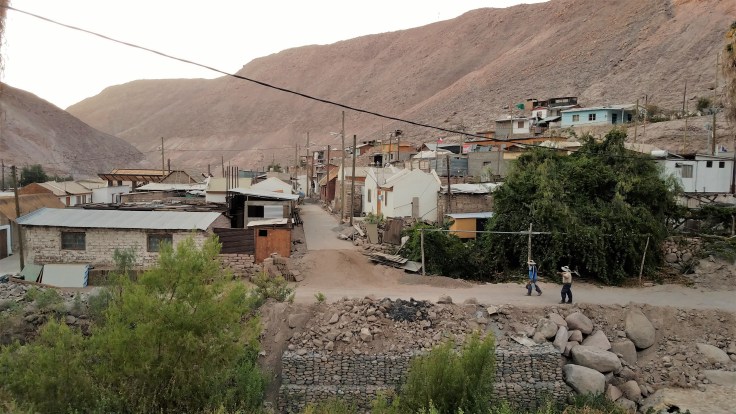
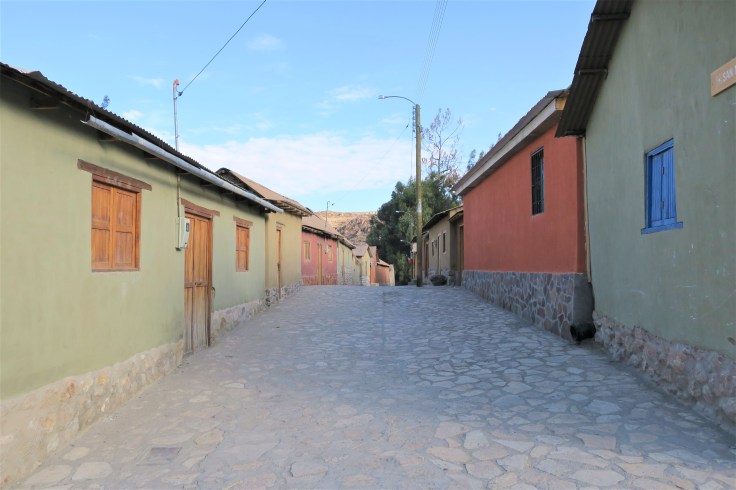
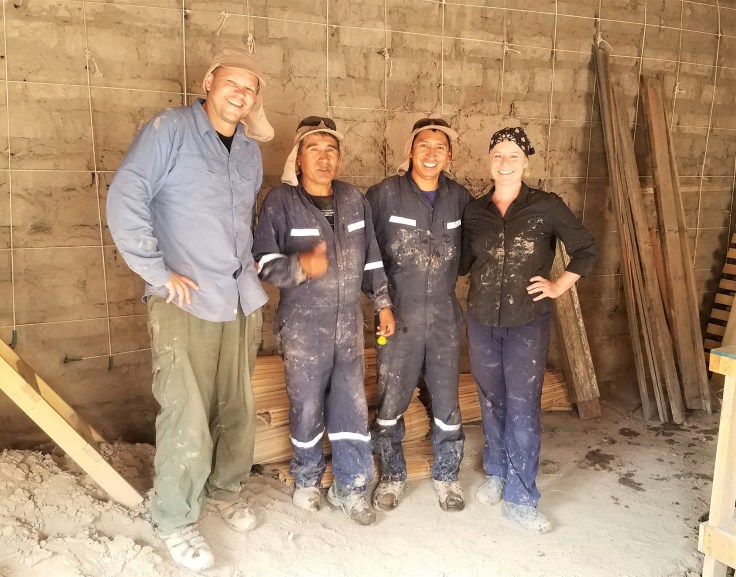
Where possible, the original adobe walls were simply repaired and a new layer of mud spread on the exterior. Where the structures were too deteriorated, the entire wall was reconstructed using modern techniques but using traditional materials (due to seismic restrictions in the Chilean building code no new, purely adobe construction is allowed). After a rough orientation in Spanish that we barely understood , we were assigned to work on a house with this second scenario, where we spent the day nailing cane to a wood frame, essentially creating a lathe structure to support adobe plaster walls.


Next we got to work with the barro, or mud. We had two amazing teachers, both Peruvian, named Mario and Jose Luis (aka Lucho), who without any English were super patient explaining the process and the purpose to us, which is basically throwing mud at a wall and then smoothing it out (ok, it’s more complicated than that, but that is the one sentence breakdown!). It actually is an interesting process of trial and error to find the right mixture of earth (tierra), sand (arena) and straw (paja) that will function as good plaster since they use local materials and every site is different. One fun trick is that they add tuna (what we call nopal) cactus to the water mixture as an extra binder and thickener. The barro for the exterior walls is also different from the mud used to make the adobe bricks, so even though earth building is basic in essence, it takes a lot of knowledge to get the construction right!


At any rate, we had fun throwing mud around and trying to make it not look totally amateur. Sam was much better at this than Steph (chalk it up to the fact he has previous masonry experience). Also, we worked on wall in a narrow passage that not many people will probably see, so if the gringos messed it up, no problemo!


We didn’t really have enough time to get in the swing of things – we just started feeling comfortable with the work and the crew and they just started getting comfortable with us – but not knowing what we were getting into, we had booked the next step of our journey and so we had to move on.
Who knows if the whole enterprise will actually succeed, or if it is scalable to the level needed to fully revive these places. We were pretty much the only tourists we saw in the days of wandering through these towns, and most of them were still shuttered and abandoned. Change is slow, especially in communities who have every reason to be wary of outsiders, and in the end the only sustainable solution is for the communities themselves to decide what is right for them. That said, we were happy to contribute to a little piece of the dream in our small way, if only to be able to witness the dedication to the cause and to share it with all of you!
If you want more information on the projects sponsored by the Fundación Altiplano check out these links:
http://www.fundacionaltiplano.cl/en/
http://www.fundacionaltiplano.cl/en/projects/
If you ever come to this part of the world and want to follow the Ruta feel free to reach out to us for more information!
 Bones Without Borders
What a positive way to end this year, and move forward…helping others to rebuild and revitalize their homes and town! How did you find out about this project and get involved? And now, with all this knowledge from experience, we can start building a little casita for Sharon in my backyard in this style? Or fix yours? Together?! We can bring the community work to our own neighborhood….
LikeLiked by 1 person
Absolutely! Love the idea of building together. And we can even put those nopales you have in your front yard to use ;). xo
LikeLike
Alaska has the same problem. The natives are moving to Anchorage and Fairbanks for schools, employment, etc.. Actually Anchorage is now referred to as “The big Village” by villagers.
The elders tend to stay in the village. Politicians visit the villages, even today, because the elders still communicate to their children in Anchorage and Fairbanks especially when it comes to voting.
Really interesting on the construction. Did you find out construction methods on the thatched roofs? Still searching for the videos. Will let you know.
LikeLike