
After Christmas we had some time before our scheduled journey to the south of the continent, and being so close to the borders of Chile’s northern neighbors, we figured we should check one of them out. We opted for Bolivia primarily because Sam had never been there, and also because we didn’t have enough time to see the sights we wanted to in Peru (we’ve already added it to the list of future adventures!).
Our entry into Bolivia had us questioning our choice. We took a bus from Arica to La Paz, an approximately 8-9 hour journey that took us back through the Lauca National Park and back to 4000+ meters above sea level. We didn’t have the luxury of a leisurely drive this time, and despite medication, we did not adjust to the altitude as well and felt a bit dizzy and ill upon arriving at the border.
Then at the border we were detained for over an hour because we didn’t have a visa to enter the country. This was bad preparation on our part – we were sure the information we had checked before leaving the States said that we could enter on a typical 90-day tourist stamp – however, our information was apparently outdated because as of late 2015, US citizens need to obtain a visa from the Bolivian embassy prior to visiting (Obvious Travel Tip Number 1: double- and triple-check the US State Department and destination country websites for the latest visa information!). The border agents offered to process our visas for $160 each, which we felt sure was a shakedown until one of the agents finally showed us proof of the visa requirement and payment. Somewhat reluctantly we paid the fee and got a visa pasted in our passports, hoping that it was legit! Thus tired, frustrated, nauseous and $320 lighter we entered La Paz, Bolivia.
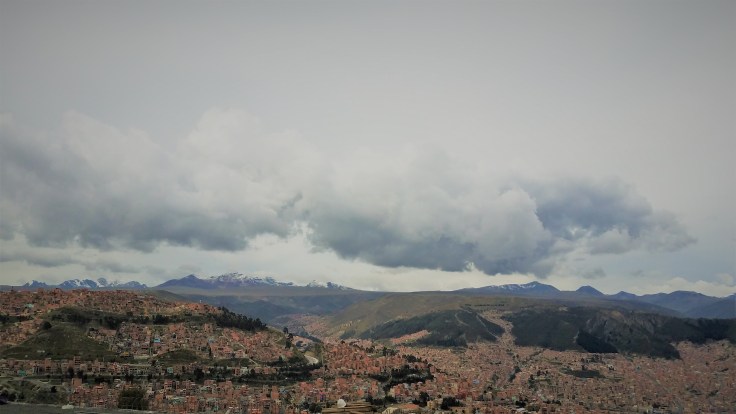
Despite being neither the capital nor the most populous city, La Paz is probably the most well-known city in Bolivia. It sits in a bowl-like valley below the altiplano, and on clear days snowy peaks are visible in the distance. On most days, it is a swarm of red brick buildings climbing the sides of the canyon against a smoggy, gray backdrop. By the time we got to our hotel we had dodged beggars at the bus station, risked our lives in Bolivian traffic (they don’t stop for anything), and got caught in a rainstorm that fell so hard it popped off drain covers in the streets, causing passing cars to soak us with a mixture of storm and sewer water. Sam instantly observed (and was later confirmed by several other travelers we met) that this is the most India-like place he’s ever visited outside of the subcontinent, meaning it is crowded, poor, dirty, and perplexing even while being oddly compelling.
Not very impressed in general with La Paz, we did find a few gems. For instance, who knew La Paz was a foodie city? Apparently it has quite a robust restaurant and cocktail scene. We found an elegant prefix lunch for less than $7 made with indigenous ingredients that remains one of our best meals to date, and a wine bar where we had local charcuterie (llama ham! pickled corn!) and Bolivian wine from the southern part of the state, which tasted like a surprisingly decent dry Beaujolais. We also visited an excellent ethnographic museum, where they had an extensive display of intricate carnival masks and feather headdresses from various parts of the country.


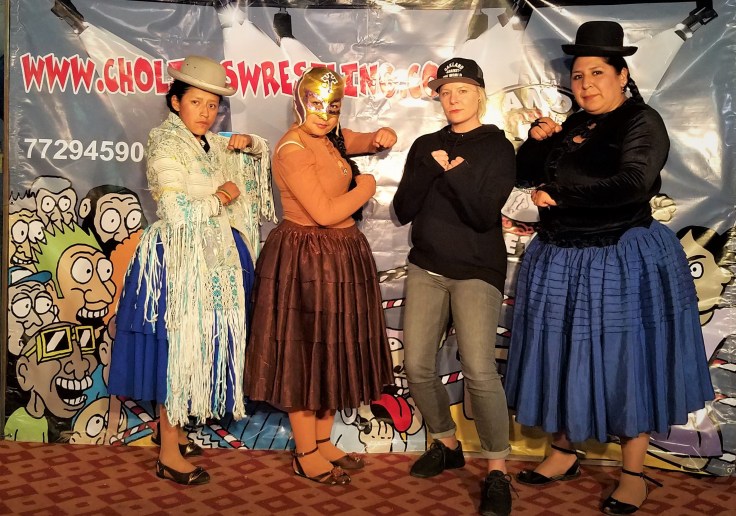
Our best outing, however, was the ridiculously entertaining cholitas wrestling in El Alto, the sprawling city on the rim of the canyon above La Paz. Similar to Lucha Libre in Mexico, this spectacle includes native women wearing their traditional petticoats and bowler hats fighting each other (or sometimes men) in the ring. Do not mess with a cholita!


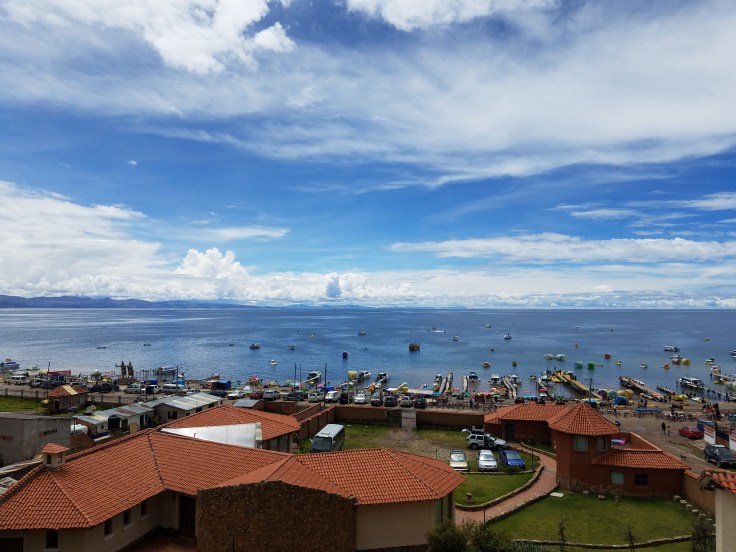
To celebrate the New Year we took a bus to the small town of Copacabana on Lake Titicaca, a cute, if ramshackle, little resort on the water and thus a popular getaway for La Paz families and tourists alike. It is also the gateway to the Isla del Sol, which has significance in Incan history as the birthplace of the Sun God, Inti. We endured another rainy, slow, and smelly bus ride and were rewarded with a beautiful blue sky afternoon. Our hotel sat just above the harbor and we had a balcony and a great view. This was a good thing because Steph spent most of the rest of the time in the room with a virus we dubbed the Bolivian plague. We don’t know what it was or where it came from (probably the damn bus!), but it wasn’t good, and Steph became good friends with the nearest pharmacist.
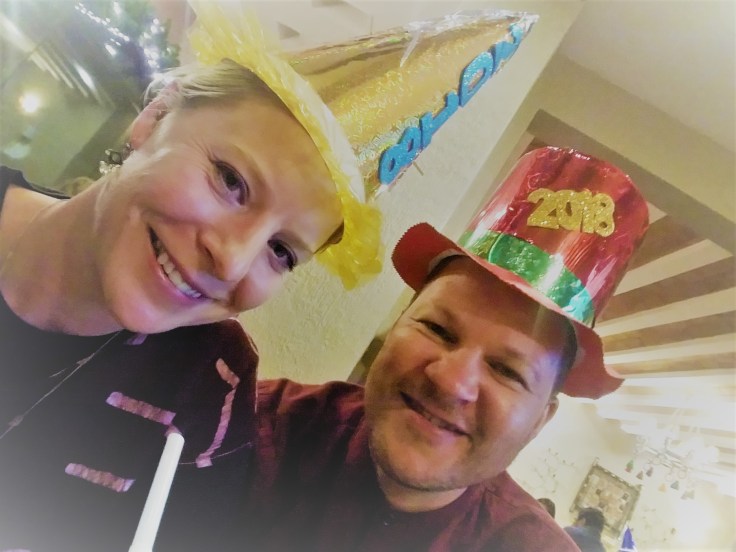
We therefore didn’t do much in Copacabana but relax and watch the water. On New Year’s Eve the hotel hosted a dinner and provided free drinks and party hats which was cheesy but enjoyable. At midnight we sat on the beach and counted down with the locals, grasping each other as people set off full size mortar fireworks within 20 feet of us, confirmation that people celebrate big events the same way around the world – with drinks and explosions! After a few days we headed back to La Paz where we embarked on two days of travel hell (more buses, two plane rides, and several taxis, with Steph still unable to breath or eat) to get all the way to southern Chile to start our journey through Patagonia.
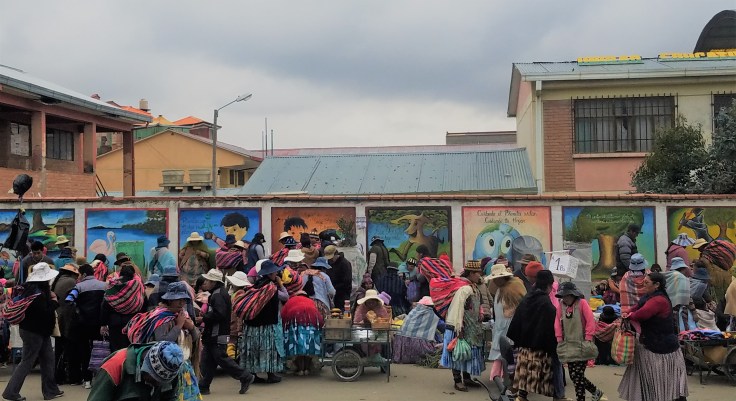
So Bolivia, in our experience, is a land of contradictions. Known for extreme altitudes, raw natural beauty, strong indigenous identity, and central importance to South American history (reaping the silver from Potosi, not gold from mythical Eldorado, was the real triumph of the Spanish conquest), one would think the country has a lot to offer. However, the same characteristics that make it compelling are the same that make it a poor and difficult country in which to travel. The mines have lost most of their wealth, infrastructure is in poor repair, and the environment is unforgiving. Now native women beg on the street with runny-nosed children, vendors sell puffed corn and scrap goods on blankets on the sidewalks, trash litters the roadsides, vehicles belch fumes and traffic is a game of survival. Yet the place also has a distinct presence: the majority of the population has indigenous features and fierce indigenous pride; markets, clothes and architecture are a jumble of fascinating color; the food is unique and delicious.
We’re sure Bolivia has a lot more to offer, and maybe we will return someday (those visas are good for 10 years!)…but probably not for a while.
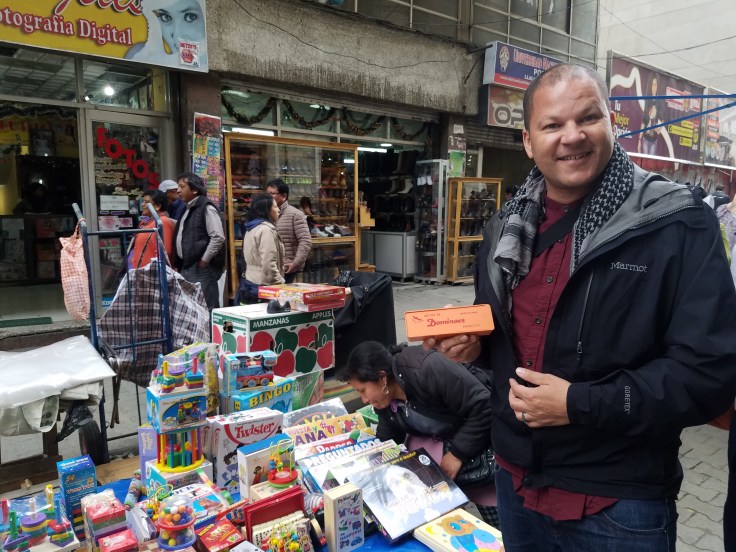
At least we finally found a fresh set of dominos!
 Bones Without Borders
It’s good you didn’t ask me, I would have suggested you to skip the country!
LikeLike